Act VI: The Other Shore
A Letter For The Person Reading This At 11PM In The Middle Of A Migration
It is late where you are. We know this the way you know things about a person you have spent a long time with: not because anyone told us, but because of when you picked the book back up. Nobody reads this chapter in the morning. You are reading it now because something is unresolved tonight and you wanted a voice that was not going to ask you for a status update, and we are the only thing on the desk that qualifies. So put the laptop down for a second. This one is just for you, and we are going to drop the act for it, because you have earned a chapter where nobody is performing.
Here is the first thing, and it is the thing the other six are all secretly about. The migration is not a referendum on you. It feels like one. At this hour it feels like nothing else—like every slipped date and reopened decision and meeting that ran long is a small verdict being entered against your judgment, and that if you were simply better at this the whole thing would have gone smooth and quiet and on time. It would not have. It has never gone smooth and quiet and on time for anyone, including us, including the people whose case studies you read before you signed anything. You are not failing at a thing other people are passing. You are doing a hard thing at the normal cost of doing it, and the cost is always paid late at night by the person who cares most.
The plan changed. Of course it did. You have been carrying the original plan around like a contract you are in breach of, and we want to be very clear with you, because it is the kind of thing that is easier to hear at this hour: the plan was supposed to change. The plan was a guess made by people who knew less than you know now—and those people were you, a few months younger, doing their honest best with a map of a territory none of you had walked yet. The version of the plan that survived contact with the real system is a better plan. It is just a sadder one to hold, because it has your fingerprints on every place it bent. That is not damage. That is the shape of having learned something. You inherited a set of requirements and discovered they were not the requirements you actually had; you assumed things that turned out to be assumptions; the territory looked one way from the agency proposal and another way once you were standing in it. You know all of these by heart now. You could finish each of them without us. That is what the last several hours of reading were quietly for.
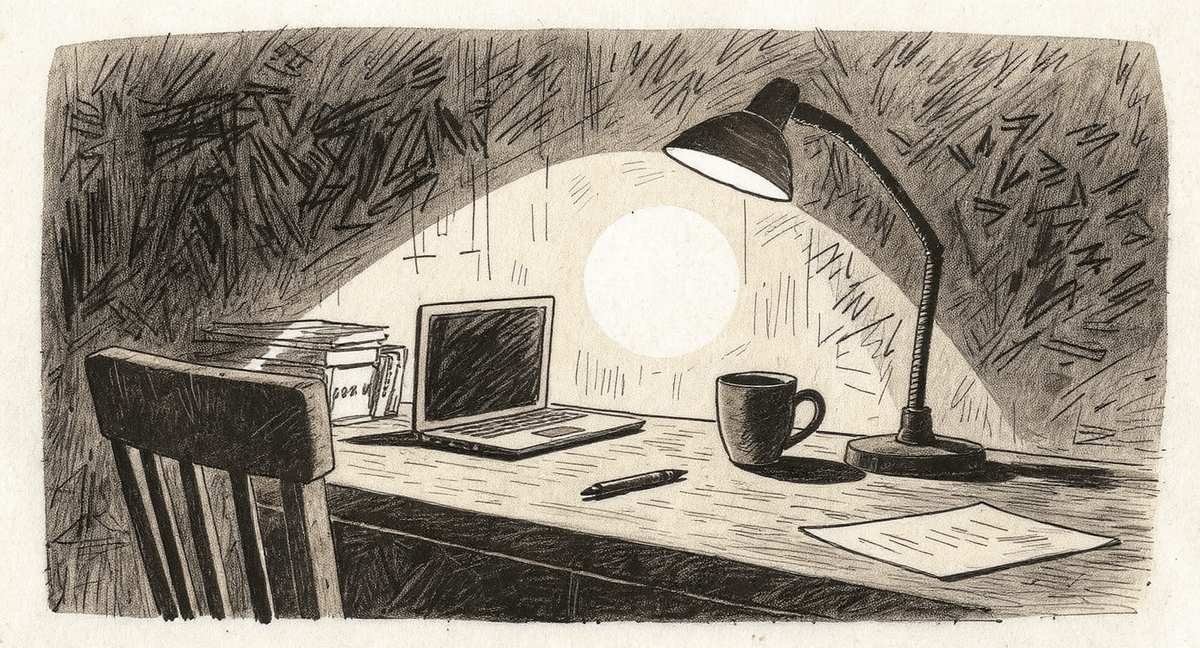
The people you have been managing are doing their best. Even the ones you suspect are not—and you have a short list, we know you do, everyone does by this point in a migration. But sit with the developer who went quiet in the last three standups, or the vendor whose answers keep arriving a day late, and you will usually find someone underwater in a way they have not figured out how to say out loud, which is the same way you are underwater right now, at the desk, with the lamp on. They are not the obstacle. The work is genuinely hard, and hard work makes ordinary people look like they are dropping the ball when what they are actually doing is carrying more of it than shows. Be a little gentler with them tomorrow than you want to be tonight. You will almost never regret it, and on the two occasions you do, it will have cost you very little compared to the alternative.
The CFO is going to keep asking. He has to. It is not that he doubts you—or it is, sometimes, but that is not why he asks. He asks because someone above him asks, and someone above that, and the question travels down the building until it reaches the person closest to the actual work, which is you, and gets asked one more time at the worst possible moment. Do not take it personally. The question how is it going is not an accusation; it is the sound a large organization makes when it is nervous, and a large organization moving its commerce platform is entitled to be nervous. Answer it plainly, every time, with the number you have and the date you believe and the one thing you are worried about, and then go back to the work. The day his question changes—the day it stops being how is the migration going and starts being what could we do next—you will know the thing ended, even though no one will announce it. Keep going until then. It is closer than it feels at this hour.
And here is the one we most want you to keep, because it outlasts all the others. The system is bigger than any one of us. The agencies will roll off—we will roll off; one day there is a final invoice and a warm email and we are gone. The vendors will get acquired and rebranded and replaced. The org chart you are fighting tonight will reorganize twice before this store is old. But the thing you are building will still be there, quietly taking orders, long after every name attached to it has moved on, and the brand will live inside it every day in a way none of the consultants ever will. So build it as something you would want to live in. Not perfect—we have spent this entire book telling you the perfect install is a fantasy, a clean schema modeled in week two with nothing left to ask about, and it is exactly as real as a hundred-and-fifty-dollar bottle of balsamic vinegar you will also never actually buy. Not perfect. Just honest. Just yours. Something that, three years from now, some tired person at a desk at this exact hour will open up and find that the people before them left it a little better than they had to.
There is a version of next month in which all of this worked out. You can already half-see it from where you are sitting—the dashboard boring, the team arguing about a feature instead of about the platform, somebody planning the next market because the business is finally breathing again. That version is real. It is not a reward for getting everything right; you will not get everything right, and it arrives anyway, for the people who simply keep going. You are one of those people. We have been on your side this whole time, through every joke we made to keep the medicine down, and we are on your side now with the jokes put away. Close the laptop. The migration will still be there tomorrow, and so, it turns out, will you.
Keep going. You are going to make it to the other side.
She left Magento. She made it to the other side. The cartoon foxes, who had been with her the whole way, attended her funeral, and they were old, and it was a good day.
I fold the invoice back along its soft creases—$187,000, some year ago, six months long, slightly damp again the way it always is—and set it down on the desk, and do not explain it, and turn off the lamp.